
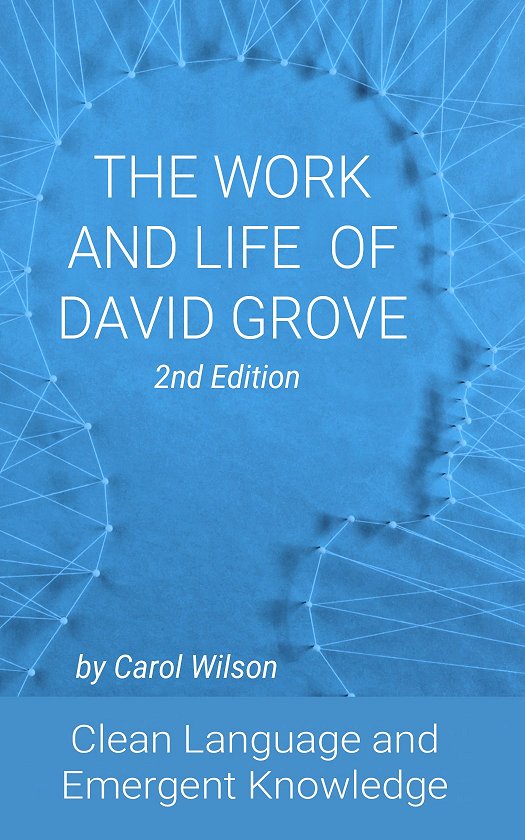
The Work and Life of David Grove: Clean Language and Emergent Knowledge
2nd Edition
In the 1980s David Grove devised a technique called Clean Language for healing patients with traumatic memories, such as child abuse or wartime trauma. The process enabled patients to resolve the effects of their experiences through visualisation and metaphor.
He converted the work into a spatial technique called Emergent Knowledge and his techniques have attracted practitioners from all over the world including the UK, Europe, America, Australia and New Zealand. Performance Coaching pioneer Carol Wilson worked with David until his death in 2008, developing courses to train coaches and business psychologists to use his methods in the workplace, in order to relieve mental blocks and limiting behavioural patterns such as fear of public speaking, bullying and thwarted personal potential.
This book is the most comprehensive work so far published about David Grove and contains a record not only of his work with Carol, but with leading practitioners across the world, including detailed descriptions of techniques, case histories and biographical details of David’s life. Performance Coaches and Leadership Practitioners will be able to enhance their existing techniques by incorporating ideas, methods and principles from this book.
It will help experienced and potential practitioners to gain an overview and a history of David Grove, and to know where to go for further research and learning.
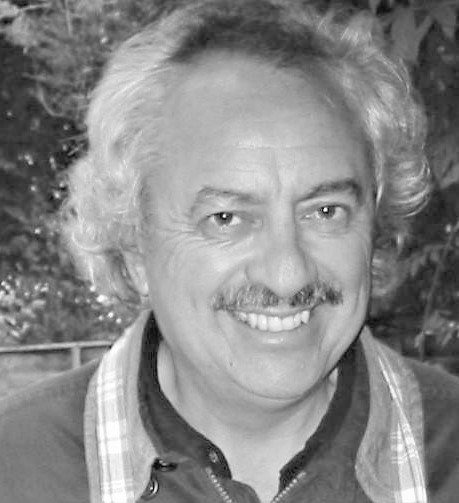
David Grove
The inventor of 'Clean Language'
Clean Language
Clean Language – David Grove’s Core Invention:
Grove created Clean Language while working with clients suffering from severe trauma, such as childhood sexual abuse, phobias, and wartime experiences. He observed that clients naturally used metaphors to describe their inner worlds but often struggled to process them directly without reliving pain. To address this, Grove devised a “clean” questioning method—using the client’s exact words without adding the therapist’s assumptions, interpretations, or metaphors—to help them explore and resolve these experiences safely.Key principles of Clean Language include:
- Minimal interference: Questions like “And [client’s words] is like what?” or “And where is [client’s words]?” encourage clients to unfold their metaphors at their own pace.
- Facilitating self-healing: It honors the client’s innate wisdom, allowing them to visualize, reprocess, and transform traumatic memories through symbolic exploration.
- Core questions: Grove identified about 8–12 basic “clean” questions used in ~80% of sessions, with the “cleanness” stemming from both the wording and the facilitator’s neutral intent.
This approach avoids re-traumatization by bypassing direct confrontation, instead building on the client’s language to access deeper “emergent knowledge.” Research has since applied it in coaching, education, and even mathematical modeling of metaphors (e.g., using chaos theory).Later Developments and Other ContributionsIn the early 2000s, Grove evolved his work beyond Clean Language:
- Clean Space (late 1990s): A spatial exploration technique where clients physically move to embody and navigate their metaphorical landscapes, further minimizing therapist influence.
- Emergent Knowledge (mid-2000s): Focused on fostering self-generated insights through even “cleaner” processes, emphasizing emergence over structure.
Grove collaborated closely with psychotherapist Cei Davies Linn in the 1970s–1990s, who helped refine early methods for trauma work. He also worked with figures like Carol Wilson on corporate applications, delivering workshops at places like the World Bank and BBC.
The Work and Life of David Grove: Clean Language and Emergent Knowledge is a significant contribution to the field.
It includes Carol’s work with David Grove between 2005 and 2007 and
contains original transcripts of both his workshops and client sessions. Carol’s inclusion of others’ recollections and case histories adds richness and diversity.
It reveals some pieces of the jigsaw of what
David meant to those many, many lives he touched. And by not editing these contributors’ descriptions she demonstrates a congruence with David’s approach of preserving his clients’ exact words, and respecting each person’s subjective experience.
But Carol has done much more than than collate others’ work. She has documented a large number of David’s processes involving metaphor, Clean Language, Clean Space and those that come under the umbrella term, Emergent Knowledge.
On top of that, her own cases studies show how she has applied Clean principles in real-world business situations.
We can think of no better way for Carol to honour David Grove’s memory than to have produced this
book.